What is Carotico-Cavernous Fistula (CCF)?
Carotico-Cavernous Fistula (CCF) is an abnormal connection between major brain arteries and veins near the cavernous sinus. This condition disturbs normal blood circulation and increases pressure inside the veins around the eyes and brain.
CCF may occur due to trauma, vascular abnormalities, aneurysms, or spontaneous rupture of blood vessels. Early diagnosis and timely neurointervention are important to prevent vision loss and neurological complications.
Common Symptoms of CCF
Patients with Carotico-Cavernous Fistula may experience:
- Blurred or reduced vision
- Eye redness and swelling
- Bulging eyes (Proptosis)
- Headache
- Double vision
- Pulsating sound in the ear
- Congested eye veins
Diagnosis of Brain Vascular Abnormality
Advanced neurovascular imaging such as cerebral angiography helps identify abnormal blood vessel connections, congested veins, and disturbed blood flow patterns associated with CCF.
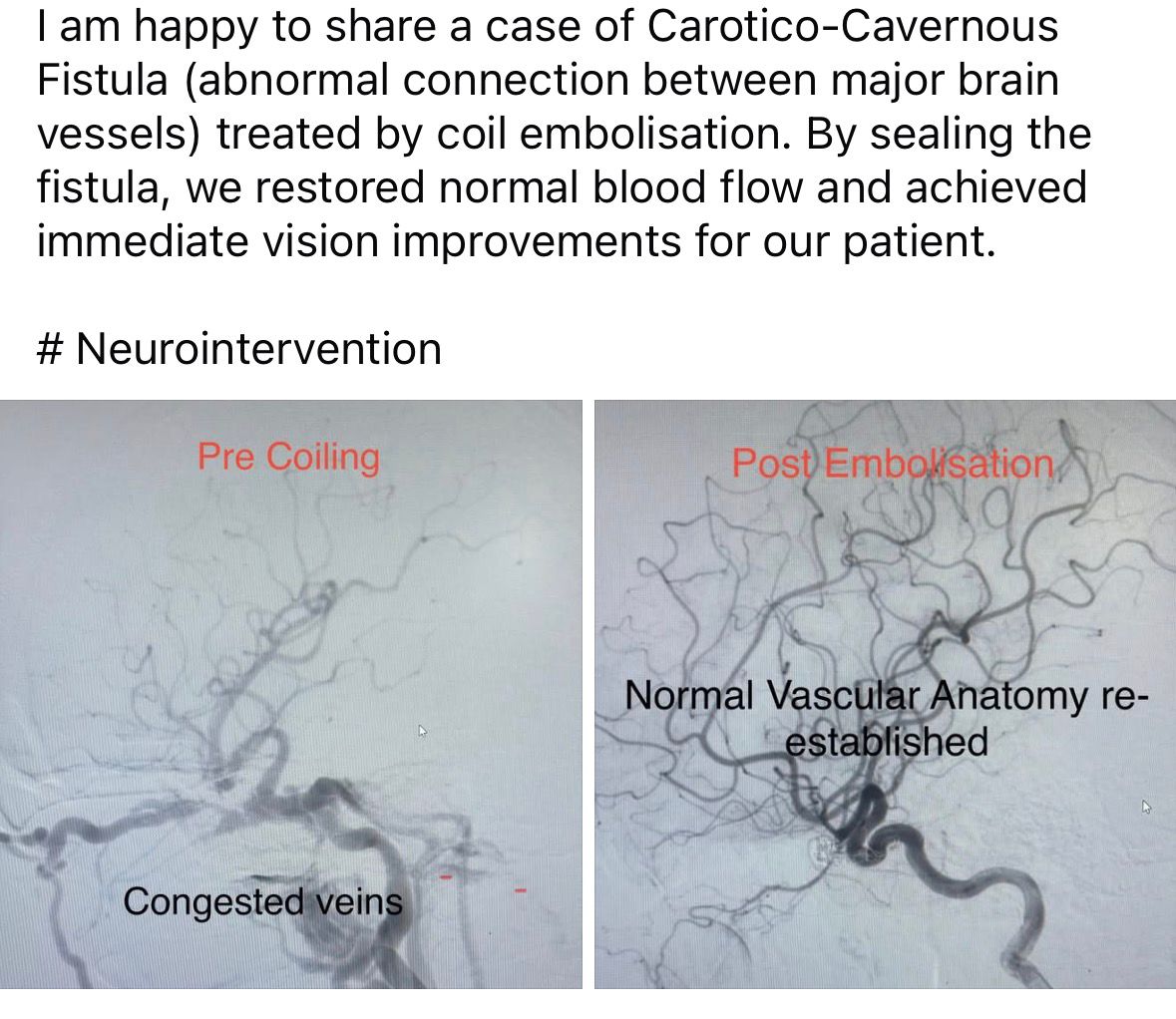
In this case, angiography revealed abnormal vascular communication with venous congestion before treatment.
Successful Coil Embolisation Treatment in Bhubaneswar
The patient was successfully treated using coil embolisation, an advanced minimally invasive neurointerventional procedure.
During the procedure, special coils were carefully placed inside the abnormal vessel connection to seal the fistula and restore normal blood circulation within the brain.
This advanced endovascular technique avoids major open surgery and supports faster recovery with high treatment precision.
Pre and Post Treatment Findings
The pre-treatment angiography showed congested veins and abnormal blood flow caused by the fistula.
After embolisation, post-treatment imaging demonstrated restoration of normal vascular anatomy with successful closure of the abnormal connection.
Treatment benefits included:
- Restoration of normal blood flow
- Reduction in venous congestion
- Immediate improvement in vision
- Successful closure of the fistula
Advanced Neurointervention in Bhubaneswar
Modern neurointerventional procedures such as coil embolisation provide highly effective treatment for complex brain vascular disorders using minimally invasive techniques.
Early diagnosis and expert treatment are essential to prevent complications such as permanent vision damage, stroke, or neurological deficits.
Patients experiencing symptoms related to abnormal brain blood vessels or sudden vision disturbances should seek immediate consultation with an experienced neurointervention specialist.